

EDUCATION
University of Chicago Consortium on School Research
The Fry Foundation “…provides an opportunity for schools and educators to see what’s possible when we partner with students. The Fry Foundation’s program officers have been incredible thought partners we can lean on for support in thinking about the educational ecosystem and about the barriers to transforming systems and how to overcome them.”
Shanette Porter, Director, Learning and Development Group, University of Chicago Consortium on School Research
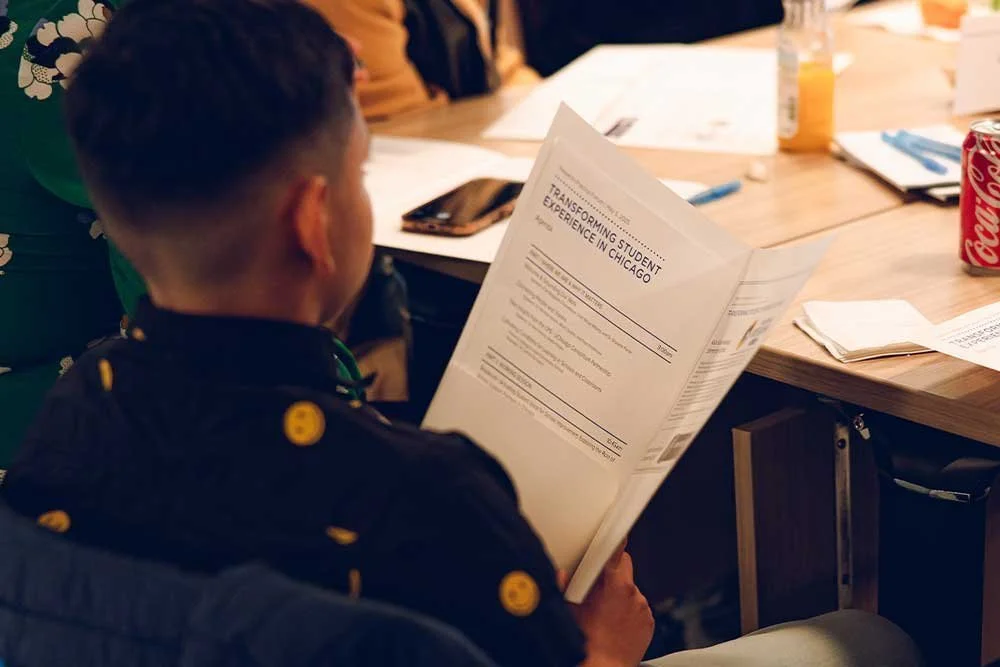

When students do well in school, it’s not only because of their academic abilities and interests. Their scholarly success also hinges on the learning environments their teachers create.
Based on data from thousands of students, the University of Chicago Consortium on School Research (the Consortium), which conducts research to improve policy and practice in Chicago Public Schools (CPS) and beyond, has found that learning environments directly affect students’ belief in their own capacity to learn. And the more that students believe in themselves as learners, the better their academic outcomes.

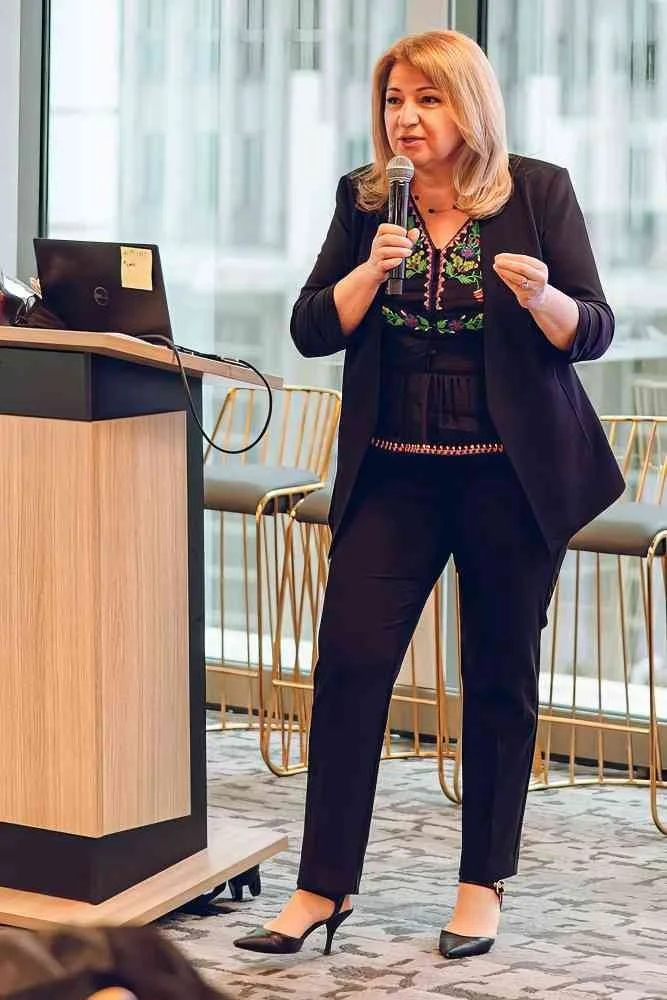

To help Chicago teachers more fully understand the learning environments they create in their classrooms, the UChicago Consortium devised Cultivate—a survey that, critically, asks students about their classroom experiences. “You cannot improve students’ experiences without hearing from them in their voices,” says Shanette Porter, Research Assistant Professor and Director of the Consortium’s Learning and Development Group, which conducts and translates research for educators. The Cultivate survey looks at both academics and social and emotional development, Porter adds. “Academic achievement and social and emotional development are flip sides of the same coin. You can’t have one without the other.”
The Cultivate survey comprises roughly 70 questions that students answer in about 10 minutes. Twice a year, Cultivate asks students in the fifth through twelfth grades their thoughts on nine learning conditions, such as meaningful schoolwork, learning goals, caring and supportive teaching, and teacher feedback. “Cultivate measures the things that teachers have control over in the classrooms,” says Faye S. Kroshinsky, Director, Youth Initiatives, Learning and Development Group. With Cultivate, students also report on their own learning beliefs, such as believing that they are valued, empowered, and capable, and thatclass is meaningful. Lastly, Cultivate asks students if they believe their responses will be used to improve their school.
A few weeks after students take the survey, the Consortium provides schools with reports featuring written and graphic breakdowns of the data, so that educators can view the survey results across factors such as grade level and demographics. Educators can see, for instance, the percentage of students in a sixth-grade math class who agree that their classroom is a welcoming place for everyone. The Consortium’s reporting site also provides practical resources, including research and recommendations.
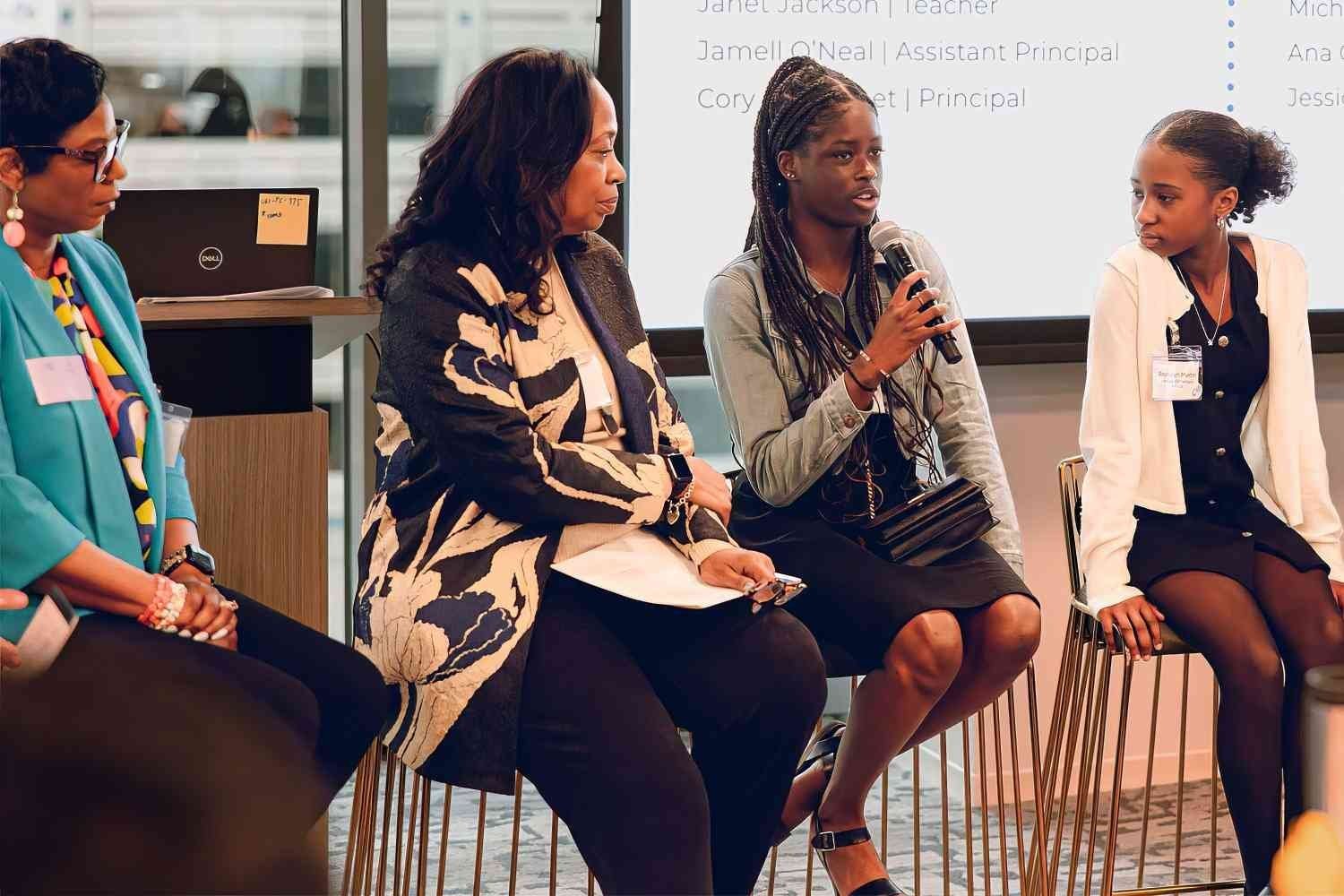
To help educators act on their data, the Consortium encourages them to do exactly what Cultivate does: listen to the students. “Get into further conversation with students and engage in continuous improvement,” Porter says. In addition to engaging students, the Consortium advises educators to identify at least one learning condition they want to improve, and to gather a team of instructional leaders who can help enact the desired change. The Consortium also counsels educators to be transparent with students about the improvement they’re seeking and then follow up with students to see if it’s working. “Cultivate is the start of a conversation, not the end,” Porter says.
Carl Schurz High School in the Irving Park neighborhood knew exactly the learning condition it wanted to enhance after the school received a middling Cultivate score on teacher feedback. “Kids can’t succeed unless they get timely and meaningful feedback on mistakes they’re making,” says Amanda Glascott, Instructional Coach, Carl Schurz High School. With the Consortium’s support, the school’s teachers conducted interviews with students and studied research on how kids learn. Schurz High School’s leaders and teachers determined they needed to replace their existing pedagogic model, in which teachers provided instruction at the start of each class and then students worked for the remainder of that period. Now, teachers alternate between shorter intervals of instruction and class work, followed by actionable feedback. Students have reported more positive experiences with the feedback they receive, and indicators of their social and emotional learning also have improved. “We were super happy with that data,” Glascott says.

Since 2022-23, the first year that CPS conducted the Cultivate survey, the Consortium has made improvements of its own. The Consortium reduced the number of questions in the Cultivate survey by about one third, so that students can complete the questionnaire more easily and quickly. To help further its work, the Consortium has organized a collaborative consisting of leaders from CPS, the Chicago Teachers Union, professional learning providers, and community-based organizations—people who can help advance the system-level change the Consortium aims to achieve. The Consortium expects the collaborative will grow to include policymakers and parents. Also in the future, the Consortium hopes to fill the current Cultivate gap for pre-kindergarten through fourth graders.
While still in its early years, Cultivate already has had a notable impact—as the data attests. In the spring of 2023, 75 percent of CPS schools had at least half their students complete the survey. Just two years later, in the spring of 2025, that response rate climbed to 98 percent. Porter recalls an anecdotal moment that speaks to Cultivate’s impact: “A parent said, ‘I can’t believe we haven’t always had this in CPS,’” she says. “People are accepting as a critical part of schools that we listen to students.” Listening to students hasn’t always been an accepted best practice in education, Porter notes. Now, thanks in part to the Consortium’s research-driven work, listening and responding to what students say about their educational experiences is not only accepted but embraced.
