
News
Spotlight: Arts Learning Program
February 27, 2026
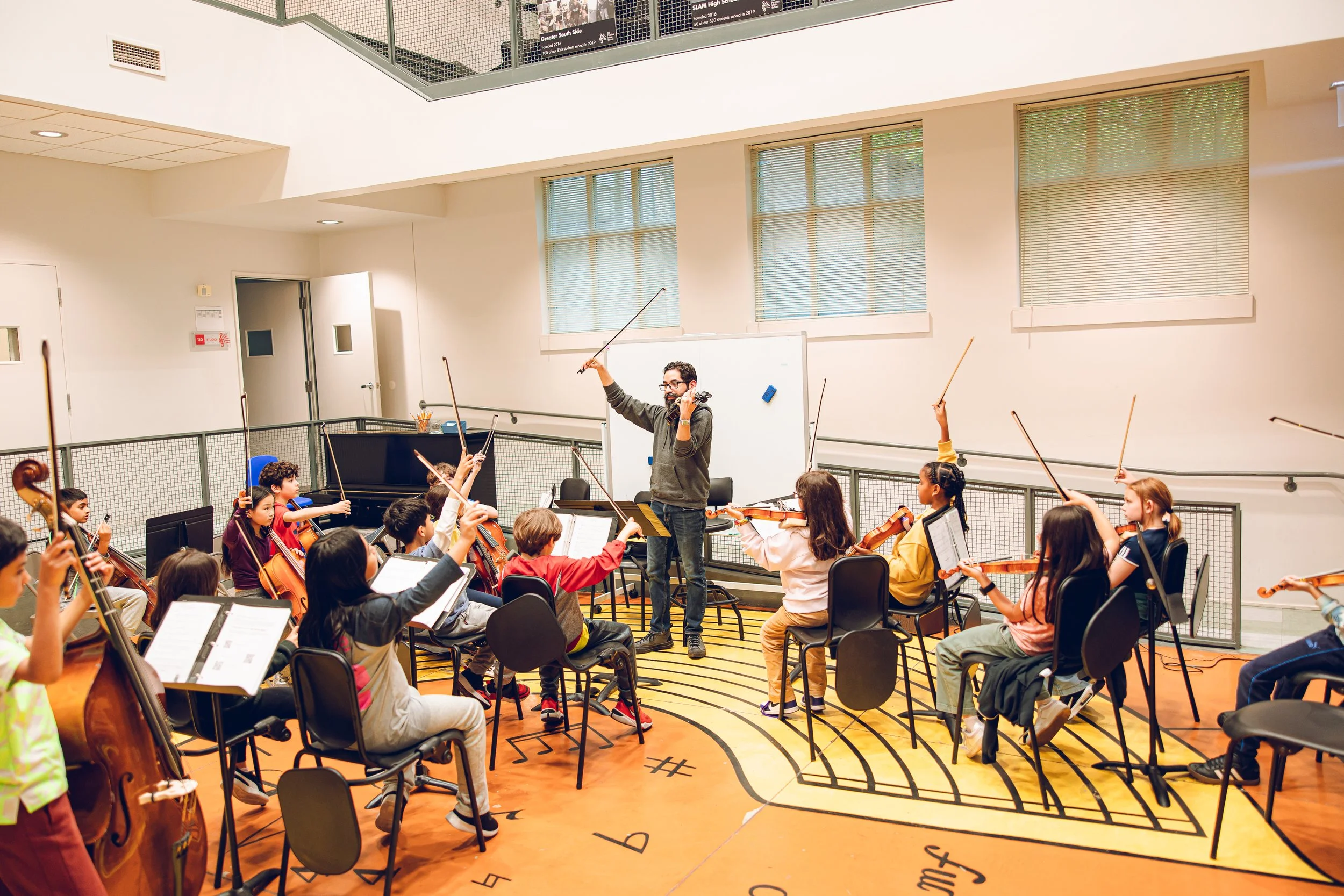
For over twenty-five years, the Fry Foundation has been actively supporting arts learning in Chicago. The longstanding goal of the Lloyd A. Fry Foundation’s Arts Learning program has been to improve access to high-quality arts learning experiences for low-income youth in Chicago Public Schools (CPS). Access is defined by who receives high-quality arts learning; quality is defined by how rigorous and engaging this arts instruction is for students. Our strategy to achieve this goal is centered around two main areas: direct arts instruction and teacher professional learning, as well as support for special opportunities to enhance the field and our grantees’ practice.
Fry Foundation leadership recognizes that our grantees are navigating turbulent times. Over the past year, Foundation staff engaged in conversations with the arts education community to better understand current conditions in the field. These conversations reveal a sector navigating significant transition and disruption.
This period of heightened instability is shaped by overlapping financial, political, and social pressures that have been widely documented. This past year has seen significant reductions in public funding for the arts, including cuts to federal cultural agencies such as the National Endowment of the Arts (NEA) and the National Endowment of the Humanities (NEH) as well as delays and uncertainty in grant disbursements. NEA funding cuts along with other federally funded social service programs underscore how competitive pressures and shifting priorities have left many long-standing grantees without continued support. This has contributed to sudden and unplanned budget gaps for organizations across the country and in Chicago.
At the same time, nonprofits are operating in an increasingly politicized environment. Organizations serving marginalized communities or engaging with content related to racial equity, gender identity, and LGBTQ+ inclusion face heightened scrutiny, legislative challenges, and public pushback. For arts organizations, especially those working with youth, this climate has created added risks around program content, partnerships, and public visibility. In some cases, organizations are weighing difficult decisions about whether to pursue funding opportunities that could limit their ability to produce work seen as championing diversity and equity. Furthermore, this polarization has contributed to a pullback in some corporate support, as companies seek to avoid reputational risk, political backlash, or heightened public scrutiny, intensifying funding gaps for arts and nonprofit organizations.
Here in Chicago, these national trends overlap with serious budget pressures at Chicago Public Schools. Over the past year, reporting on CPS budgets has highlighted ongoing deficits, the end of federal pandemic relief funding, and tough choices for district leaders. These challenges directly affect arts learning organizations that work with schools. As school budgets tighten, schools have less flexible funding, contracts may take longer to approve and ongoing budget challenges force school leaders to prioritize competing programs. As a result, even long-standing arts partnerships have become less stable.
In light of this ongoing disruption across the field, Foundation staff are actively working to make sense of how changing conditions are affecting organizations across the Arts Learning portfolio. Staff remain in close conversation with grantee partners to understand emerging needs and challenges. These insights help inform where additional support or flexibility may be most helpful.
We recognize that current conditions may affect organizational stability and, in turn, shape how grantee partners are able to engage in their core work. In this context, the Arts Learning program may need to work differently.
Under these conditions, we will look closely at the potential impact on students and schools, the severity and duration of disruption, organizational leadership capacity for planning and response, and the equity implications for historically underserved communities. We will also consider whether additional short-term support could help stabilize core programming. These factors will help guide staff conversations and inform recommendations while remaining grounded in partnership with grantee partners.
Moving forward, the Fry Foundation will explore ways to be flexible and responsive in our efforts to support organizational stability and protect access to high-quality arts learning for CPS students.
We will also continue to look for opportunities for grantee partners to share practices and lessons learned to strengthen instructional quality and student engagement across the portfolio. This may include facilitated convenings, shared professional learning, or collaborative exploration of engagement and assessment practices, structured to remain voluntary and responsive to grantee capacity.
[1] WBEZ. “Trump cuts NEA grants for Chicago arts organizations” May 6, 2025
[2] New York Times. “Told to Avoid D.E.I., Arts Groups Are Declining Grants Instead”. November 20, 2025